Wednesday, 22 August 2018

Thursday, 25 January 2018
Guiding For Bass - Not all locations are equal
The key to any successful and sustainable tourism initiative is achieved through a clear sense of difference from other competing destinations or services. For me as a bass fishing guide this was achieved by basing any development and marketing strategy on the local attributes and strengths of Wexford as a bass angling destination. This was combined with the unique varied and challenging angling coastal environments, heritage sites and abundant local flora and fauna including of course the fish. It was within this world that I chose to guide for bass on a full time basis.
Working on articles for angling publication or my site I attempted to portray both Ireland and Wexford in a very positive light. Whilst delivering my workshops or whilst guiding for bass this was done in a fashion that emphasised the importance of ‘where we were going’. I tried to achieve this by making the most interesting photographs and words that I could, not only of the fish but of the people who were fishing with me capturing the environment and time in which they found themselves either being guided or during learning . There are many things other than fishing that make any trip to Ireland worthwhile, and it was important for me to remember that when I was out there working as a guide. Not only was I looking to capture that ‘trophy’ moment, but I was also hoping to record the influences, the many different environments that were shaping peoples experiences of the country in which they were investing a lot of personal time. The culture, the lifestyle, the history of Wexford all played a part in shaping a sense of authentic service.
Not only was it important for me to realise that each experience was unique, but by spending time in many of the different bass fishing environments and places of local heritage and culture enabled people to understand the interdependence and influences that one environment has upon another. It is only through this understanding and wider sense of enjoyment that a much greater appreciation and understanding, advocacy and empathy for the protection and conservation of the coastal resource in all its aspects truly developed in peoples minds.
The richer the experience that was offered to the guided angler the greater was the chance of diversification into the local community and the support of ancillary services. Good food, good traditional music, immersion in modern Irish life, quality Irish made product, indeed visiting anglers couldn’t find this ‘uniqueness’ at home, hence it created a special trust between guide and angler. The foundation of any guiding service.
However, I was always conscious that over-selling a product could have a negative impact on any business, especially a fishing guiding service. Angling guided services should not to be encouraged or developed for their singular sense of ‘self promotion’ ‘look at me I’m a guide’. To be successful as a guide is to be many things but bass guiding in Wexford was mainly about not standing in isolation but rather about building a small community based economic and local development tool aligned to creating a total ‘local’ and sustained experience.
There needs to be a reduction in the the modern craven urgency expressed frequently in the over utilisation of angling journalism and various media as a means to secure customers or build 'angling credibility'. A decrease of the obsessive culture of ‘self with fish’ portraits or look at my new gear obsessions might serve long term and sustained development better rather than quick fix ego shots.
The facilitation of manipulated social media reportage that serves no real end in achieving competence proves ultimately fruitless and in fact damages the fishery.
There’s a fine line between selling the fishing and managing the corresponding impact on your future clients realistic expectations. A good guide will always try to strike that balance especially when linked with important locations, the fish that live there and their continued protection management.
Not all locations are equal...hard choices and decisions need to be made with long term sustainability in mind.
The careful management of my guiding service into other local tourism networks and taking sensible opportunities to work and demonstrate allegiance with other local similar businesses with diverse but related experience and knowledge (fly tyers, fly casters, other guides, or accomodation providers) was a large part of business development for me. This strategy even today projects confidence, enhances profile and indeed professional credibility. It also strengthens possible partnerships that can create foster and extend networked interdependent strategic relationships across local coastal communities, conservation groups and activity providers.
The Wexford environment doesn’t possess dramatic, jaw-dropping scenery. It doesn’t have the ruggedness or sense of wilderness that you get on the west coast. It doesn’t have outstanding architecture. What Wexford does have is a multiplicity of different smaller environments and opportunities that are much more complex and which interact in a way that is so subtle it can almost be overlooked.
You must look closely, almost discover each one be it cultural, natural, or historical in order to experience the fullest and greatest depth of detail. To be transformed by the time invested.
Ultimately an ‘experience’ a ‘transformation’ is what I tied to create for my angling customers, the readers and visitors to my blog. By facilitating people into a multiplicity of venues, the sanctuary of estuaries, the excitement of rocky shores, the thrill of fast moving, powerful currents, the more likely they were to see and feel the ‘Wexford Bass Angling Experience’ that I tried to create.
“EVEN AFTER SPENDING A LIFETIME OF FISHING FOR BASS IN THESE VENUES I REALISED EVENTUALLY THAT WE WERE SIMPLY SCRATCHING THE SURFACE OF POSSIBILITY, IT WAS BOUNDLESS IN TERMS OF TECHNIQUES, METHODS, PRESENTATIONS…”
Most seasoned travellers will know that to expect too much is to invite disappointment. “There are not as many fish as I expected”, “The fish are smaller than I expected”, “The weather is different than in my own country”. The weather is the major stage on which all the elements will perform. In Ireland that factor is enough to strike fear into the heart of any guide. It’s simply not possible to plan at times. Some seasons were extremely difficult for bass fishing. And this is where the paradox lies. Wexford has its own unique environments, it has its own sense of itself and it has a superb saltwater sporting fish that performs admirably on fly or lure. But it performs only on the basis of two key elements one which is predictable (the moon) the other (the weather) is not so regular.
The portrayal of the fishing and the fishing environment must always reflect a performance risk accurately and fairly to visiting anglers.
We all know yes, that at different times bass can be caught with many different methods. All anglers have their preferences and the more sporting the method employed the more the weather will impact negatively upon that method. It will force you into circumstances where you need to ‘angle’ much more creatively and efficiently. By combining the environmental impact and the challenges that the weather creates for lure and especially fly-fishing, this fusion of influences must somehow manage to enhance the experience by transforming the customer beyond the angling difficulty.
What is achieved easily in bass fishing is often forgotten quickly with little or no understanding of its significance, this is true of technique, local information and angling presentations. There is always much more than this that needs to be experienced. We need to be transformed to fully understand the larger picture.
In other words, it was not always easy for an international bass angler to come to Wexford to catch bass at the drop of a hat. It could take time and effort, patience and depending on circumstances this could have been days, weeks or even years.
When it was difficult it was always the smaller decisions, the glimpses of fish in a wave, the perfect cast into a gale, the surface strike in pouring rain –moments of genuine satisfaction that made the fishing what it was. Don’t be fooled into thinking that it was easy, it was not! At times the sun shone and every fish was big and silver and each cast produced a miracle. Those were the days that we fished for.
But remember too – Wexford was and is currently challenging, but it has many different rewards if you know where to look. If you like to discover whats local and unique and what will ultimately transcend less important things then remember too what can truly transform you
‘AT THE TIMES THE SUN
DOES SHINE AND EVERY FISH IS BIG
AND SILVER AND EACH CAST
PRODUCES A MIRACLE, OR NEARLY, AND MEMORIES ARE FORGED IN GOOD COMPANY AND SURROUNDINGS.IS IT HOW YOU GOT HERE?
OR IS IT ALWAYS THE FISH? ’

Sunday, 24 April 2016
Guiding & Workshops Closed - Website now at THIRTYARDS

Transforming us.
Bass fishing in Ireland has given me many moments, some of unforgettable shared miraculous grace, others that are both very personal remote and at times inexplicable.
My name is Jim Hendrick, I have been lucky to have fished for bass since childhood, somehow the fish have moved in and out of my life in mysterious ways over the past forty years or so! Recently after working for the past 12 years as a bass fishing guide I have had to change my life a little, again, and I no longer guide for bass! Some of those 12 years are archived on this website from Probassfisher.
I prefer now after all these years to fly fish for bass and I can be found at www.jimhendrick.com
I prefer now after all these years to fly fish for bass and I can be found at www.jimhendrick.com
This change in my life was borne of circumstances beyond my control and beyond the parameters of how I felt I could run my bass angling guiding business. I will no longer continue to guide for bass and seatrout fishing for many reasons but I am happy now to mostly spend my time on the coast with personal saltwater fly fishing in mind. This decision has not been easy, but at this time there are simply too many circumstances and aspects that currently exist in Irish bass fishing that make the change one that I am very happy to have made. This change has also allowed me time for considerable reflection.
After more than twelve years of freedom to personally build and evolve through something worthwhile as a bass fishing guide was given to me by two people at the center of my life. This freedom was way beyond any normal sense ‘value’. I was free to contemplate the rise of a tide over a location, free to rise from a warm bed at 02:00 hrs to bring people from around the world onto the coast to fish for bass, free to watch a breeze arrive across a mirrored sea. Free from the constraints of 9 to 5 ‘time’, mostly had no consequence unless it was connected to a tide or arrival of weather fronts or departure of customer or season. I have time now to contemplate the consequences and meaning of such generosity.
Today I don’t have that same freedom but my anticipation of being on the coast to fish when I can is even more heightened, more valuable, more significant. Time cannot be wasted and I am more eager, more interested more challenged by my personal fishing than I have been in a long time. I don’t regret not having that same freedom, I have been lucky beyond belief, worked hard, created luck,struggled, laughed, cried, failed, lost, learned, understood, witnessed and grew. I bring this with me now to my life, my family, my new work and more than anything to my new found re-discovered personal bass fishing. The coast, bass and bass fishing will always remain a large part of what I do and who I am.
The experiences have taught me to be aware that the fishing will always be there, waiting, for any time that I might choose to use it again. Whenever I am ready, whenever the coast is right again! I am waiting too…
Tuesday, 16 February 2016
Fishing not casting
I first started catching bass on metal, most notably the choice was either the Abu Krill or Abu Toby. The reel I used was a DAM Quick 440N and it was loaded with 12 or 14lbs BS mono. I learned quickly to terminate the line with both a link swivel and a normal swivel. Things improved dramatically when my father bought me a 10’-0” Berkley Buccaneer spinning rod. This longer lighter rod replaced a solid glass rod my grandfather had given me earlier, the Berkley was pale blue in colour and had complex wrappings at the butt, with black foam handles, I loved its oversized rings. It changed my bass fishing life at the time and I fished with it for many years.
On a summer strawberry pickers salary, I learned to be careful and clever with the gear I had. There were days with many fish, days with few and lots of days with none. With the Berkley I would also use simple light terminal tackle, paternosters and ragworm or crab, rolling and watch leads. But spinning the Krill and Toby were always for me what I enjoyed most. I had two types of fish to catch the easy ones based in and around Wexford harbour and the difficult ones based south on the coast at Kilmore and Rosslare. Difficult because it involved a 15-mile cycle, twice!
Over lots of time I developed different skills with each of the lures. They fished differently of course and I felt I could catch fish on most occasions with what I had learned. Any of that arrogance of competency was destroyed early one morning in the company of Clive Gammon at a reef near Rosslare as I stuck a Krill in a rock on the first cast, the least said the better!
I fished then with the attitude that the fish were always in front of me and it was up to me to catch them. I believed they were there swimming, hunting, waiting. If I was fishing and not catching it was because I wasn’t good enough or the fish didn’t want what I was using or they saw it too frequently or whatever.
I still fish like this today, I believe they are there. But now I believe that in many situations rightly or wrongly of course, that if I’m fishing and not catching that I must ‘fish’ less and spend more time waiting before I cast again. In some instances I’m impacting the fish if I continue to simply cast.
So I stop casting and I start fishing…
On a summer strawberry pickers salary, I learned to be careful and clever with the gear I had. There were days with many fish, days with few and lots of days with none. With the Berkley I would also use simple light terminal tackle, paternosters and ragworm or crab, rolling and watch leads. But spinning the Krill and Toby were always for me what I enjoyed most. I had two types of fish to catch the easy ones based in and around Wexford harbour and the difficult ones based south on the coast at Kilmore and Rosslare. Difficult because it involved a 15-mile cycle, twice!
Over lots of time I developed different skills with each of the lures. They fished differently of course and I felt I could catch fish on most occasions with what I had learned. Any of that arrogance of competency was destroyed early one morning in the company of Clive Gammon at a reef near Rosslare as I stuck a Krill in a rock on the first cast, the least said the better!
I fished then with the attitude that the fish were always in front of me and it was up to me to catch them. I believed they were there swimming, hunting, waiting. If I was fishing and not catching it was because I wasn’t good enough or the fish didn’t want what I was using or they saw it too frequently or whatever.
I still fish like this today, I believe they are there. But now I believe that in many situations rightly or wrongly of course, that if I’m fishing and not catching that I must ‘fish’ less and spend more time waiting before I cast again. In some instances I’m impacting the fish if I continue to simply cast.
So I stop casting and I start fishing…
Tuesday, 9 February 2016

Saturday, 30 January 2016
Countdown
Can we catch big bass consistently?
Is this a question we should be interested in?
Is it really that important that we pursue bigger fish?
Remember too in a healthy protected population of fish we could all be catching more and bigger fish – simple!
There’s a considerable angling challenge of course in pursuing bigger fish in a very much reduced population, which often leads us to conclude that once we catch one we have become better anglers. This is fine if we believe we have become a better angler than we have previously been because of the experience and focused effort but not so good if we think this has made us ‘better’, in some ways, than other anglers.
An angler spends forty hours a week for four weeks fishing for bass. He catches one fish greater than ten pounds each week. Without knowing the detail of his considerable effort we would consider him a master bass angler who has caught four specimen fish in a month! Perhaps we should read – after 160 hours of fishing he has caught four specimen fish.
Time on the water is one simple factor that will inevitably yield bigger fish to already capable and experienced anglers. The more time you are willing to invest the more likely it becomes that you will encounter bigger fish.
Some anglers who are prepared to spend a lot of time in pursuit of bigger fish will invest in specific locations with specific techniques, say eight hours a day lifting and dropping plastics in a current for five days to catch a ten pounder. We already know, and often too easily, that this is a deadly technique, so another capable angler spends two 20 hour weekends on the same technique and catches a ten pounder.
One angler catches a ten pounder after a week of fishing one angler after a weekend. It’s a question of perspective. But it is always related to personal effort and learning and technique and time on the water.
It’s probably inevitable that if we spend a lot of time at something we should also get better at it. This may not always be the case, but if we build on our experiences which have helped us to improve then it will be similar with bass fishing. The more time we spend and invest the better we become, if we are learning! To that extent we probably are catching two ten pounders in forty hours of effort. Or one fish in twenty hours of effort and so on.
We can get increasingly consistent with time effort and understanding. Our frequencey of capturing bigger fish will increase. What you do with this ‘learned consistency’ is for you to decide, you’ve earned it, you’ve done the time.
I once showed a very nice man how to cast a lure rod, how to control a surface lure, how to give the fish the bait. It took two hours. On the next tide he caught and landed an eleven-pound bass after twenty minutes of effort. He was happy beyond belief.
Within one year he was catching bass on the lure regularly
I once showed a very nice man how to cast a fly line, how to control a big streamer, how to give the fish the fly. It took two years. During the third year he caught and landed a ten-pound bass after eighteen months of effort. He was happy beyond belief.
Within three years he was catching bass on the fly regularly.
Both are now (if we were to think of it in such a way) on a one big fish every 50 hours and declining time routine ! – that’s if, of course, they stop and are bothered, which is doubtful, to count and weigh and measure that is!
Tuesday, 1 December 2015
Freedom
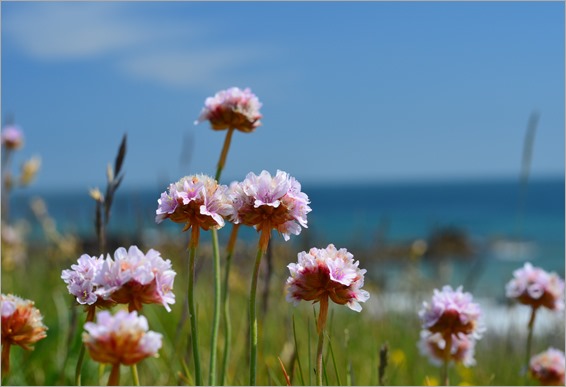
‘I wonder sometimes that maybe as a result of my new found stability perhaps the words above or indeed similar thoughts are written too easily, without significance and perhaps they are not that important now. Are they too casually constructed in the new found comfort of a more stable and ‘normal’ lifestyle? Jim has come to his senses!
Do not be fooled into thinking that those ten years were not valid, not worthwhile, a meaningless exercise in fishing futility because believe me, no matter how I feel right now there is no ‘time’ and no ‘where’ I would rather be other than arriving to my home of a summer evening with my customers having spent a rewarding day attempting to catch bass on the Wexford coast’
Saturday, 28 November 2015

Thursday, 5 November 2015
Sunday, 1 November 2015
New commercial and recreational fishing restrictions for Bass in 2016–and indicated sources of data.
Please find some collated notes from various sources re bass fishing both recreational and commercial
_________________________________________________________________
www.gov.co.uk
Throughout 2015 the European Commission has been working with member states and their scientific advisors on a range of measures to reduce bass fishing mortality. However, stocks are continuing to decline and further measures have been put in place to protect bass.
In 2016 additional restrictions are to be implemented on both commercial and recreational fishermen, and those restrictions will be published in the new TACs and Quotas Regulation in early January 2016. Until the new regulation is published the existing measures in Council Regulation (EU) 2015/104 will continue to remain in force.
When the regulation has been published the MMO will issue a variation to all fishing vessel licence holders setting out the measures, which include:
Reproduced here courtesy of - https://www.gov.uk/government/news/new-commercial-and-recreational-fishing-restrictions-for-bass-in-2016
____________________________________________________________
BASS and Angling Trust Statement
Organisations representing Britain’s 800,000 sea anglers have reacted furiously to the news that EU Fisheries Ministers, including the UK’s George Eustice, have caved into pressure from commercial fishing interests and granted exemptions to the highly damaging bass gill net fishery. This sector, described by Eustice as ‘low impact’ is actually responsible for by far the greatest over-fishing of threatened bass stocks in the UK. It will now only be closed for two months of the year rather than six as was planned in the proposed European moratorium on commercial bass fishing during the spawning period. For the UK alone, this represents an increase in gill net landings of 131 tonnes compared with the scientists’ recommendation of a maximum of 541 tonnes of landings in 2016 for the entire Northern bass stock. Furthermore the gill net monthly catch limit per vessel has been raised from 1.0 to 1.3 tonnes, making a nonsense of claims to be conserving bass stocks in line with the evidence and best scientific advice.
At the same time, the £200 million recreational bass sector will see a zero bag limit in the first 6 months and in the second half of the year the bag limit for anglers will be reduced from three fish a day to just one. Whilst anglers were pleased to have retained catch and release fishing for bass during the first half of the year, they claim that the overall package has unfairly targeted the one activity that is most sustainable and creates the greatest economic benefit, in favour of allowing what is virtually ‘business as usual’ for the netters. Prior to this week’s Council of Ministers meeting in Brussels to consider the Commission’s proposals, both the Angling Trust and the Bass Anglers Sportfishing Society (BASS) lobbied George Eustice to retain Catch and Release angling from January to June, to remove the gill nets and make bass a hook and line fishery only.
The only UK commercial sectors that look like seeing any significant reduction in catches are the trawlers and seiners which account for only 15% of all UK bass landing, whereas gill netting is responsible for over half of total UK bass catches each year and so should be the major target of these restrictions.
The figures recommended by the scientists at ICES in order to rebuild European bass stocks were for an 80% reduction in landings in 2015 and a 90% reduction in 2016 down to 541 tonnes in total. By watering down the Commission’s proposals, through an increase in the monthly vessel catch limits for both line fishing and gill netting and restricting their closure period to just February and March, the impact is now likely to deliver a little more than a 20% reduction in mortalities. By contrast anglers will be expected to return every bass they catch from January to June and then see their bag limit for the remaining six months slashed by 66%.
Angling Trust Campaigns Chief Martin Salter said:
“This is nothing more than a conservation con trick by politicians who have ignored the science and capitulated to commercial pressure from the very sector that has caused the decline of bass stocks in the first place. Anglers are supposed to feel grateful for being allowed to return our bass to the sea during the first half of 2016, whilst for four months of that period gill netters will actually see their catch limits increased. And how gill netting, which is responsible for more than half of all commercial UK bass landings and catches two and a half times more than any other method, can be labelled ‘low impact’ simply beggars belief.
For George Eustice to describe what has been agreed as ‘a good result’ for bass whilst at the same time claiming on TV that his local netsmen will be virtually unaffected by ‘this generous exemption’ is downright disingenuous and deeply insulting to Britain’s anglers and anyone else who cares about sustainable fish stocks.”
Nigel Horsman of BASS added:
“Once again, our politicians have ignored the scientific advice, ignored the economic facts, thought only about the short term and given in to the bullying tactics of the commercial fishing sector, shafting the future bass fishing prospects of hundreds of thousands of sea anglers in the process. The rapid decline in bass stocks will continue under this deal, giving a real risk that the whole bass fishery for everyone will have to be shut in the next year or two, just as we warned the Minister directly last week. A major plank in the reform of the Common Fisheries Policy was to take politically motivated, short term dealing out of fishery management and replace it with long term decision making based on ecological, economic and social evidence. Our politicians have just driven a coach and horses through their own new rules, proving again, that they are not to be trusted with anything to do with fishery management. Sea anglers are justifiably furious with this outcome for not only threatening their future sport, but also for the blatant disregard for any fairness or justice in allocating these “fishing opportunities” between anglers and commercial fishermen. This is a shameful result.”
Long standing bass campaigner and Angling Trust Ambassador Malcolm Gilbert said:
“The recreational sea angling sector has been well and truly screwed over by the politicians. This year, we have had a bag limit of 3 bass. In 2016, whereas, gill netters can now fish during four of the first six months and retain/land up to 1300 kilos in each of those months, recreational anglers have a zero bag limit. For the second half of the year, again whilst gill netters can retain/land 1300 kilos each month, recreational sea anglers are subject to a one bass bag limit. [Defra must have told the Minister that in 2014 only 111 vessels out of 1,331 in the UK managed to catch 1000 kilos of bass in a month, so the vast majority were unaffected by such a limit, yet the Minister has seen fit to increase the limit to 1300 kilos for gill netters, effectively dismissing the scientific advice with similar contempt with which he has treated the recreational sea angling community.
This debacle is not only grossly unfair to recreational sea anglers but even more importantly, the bass resource itself is going to be subjected to far higher levels of fishing mortality than the scientists recommend. In the long term it is a catastrophic outcome for all of us who crave restoration of bass stocks with truly sustainable long term exploitation.”
The Angling Trust will now be briefing MPs on the consequences of these latest decisions on bass and is hoping to see a debate in the Commons in order to hold the minister to account for this failure to deliver meaningful conservation measures and some of the extraordinary claims that he has made in defence of unsustainable fishing methods.
Reproduced here courtesy of - http://www.saveourseabass.org/en/fishing-ministers-accused-of-shameful-conservation-con-trick-over-bass-stocks/
_________________________________________________________________

___________________________________________________________
_________________________________________________________________
www.gov.co.uk
Throughout 2015 the European Commission has been working with member states and their scientific advisors on a range of measures to reduce bass fishing mortality. However, stocks are continuing to decline and further measures have been put in place to protect bass.
In 2016 additional restrictions are to be implemented on both commercial and recreational fishermen, and those restrictions will be published in the new TACs and Quotas Regulation in early January 2016. Until the new regulation is published the existing measures in Council Regulation (EU) 2015/104 will continue to remain in force.
When the regulation has been published the MMO will issue a variation to all fishing vessel licence holders setting out the measures, which include:
For commercial fisheries:
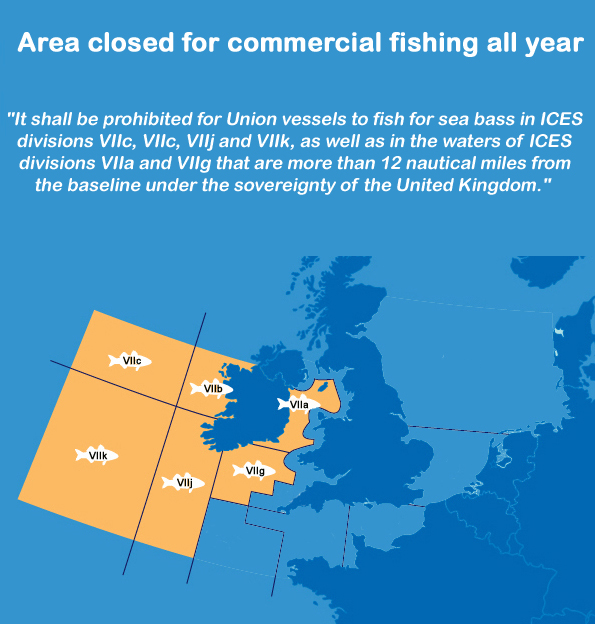
- a continued closure throughout 2016 to all commercial bass fishing in ICES Areas VIIb, VIIc, VIIj, VIIk and outside the UK 12nm in areas VIIa and VIIg;
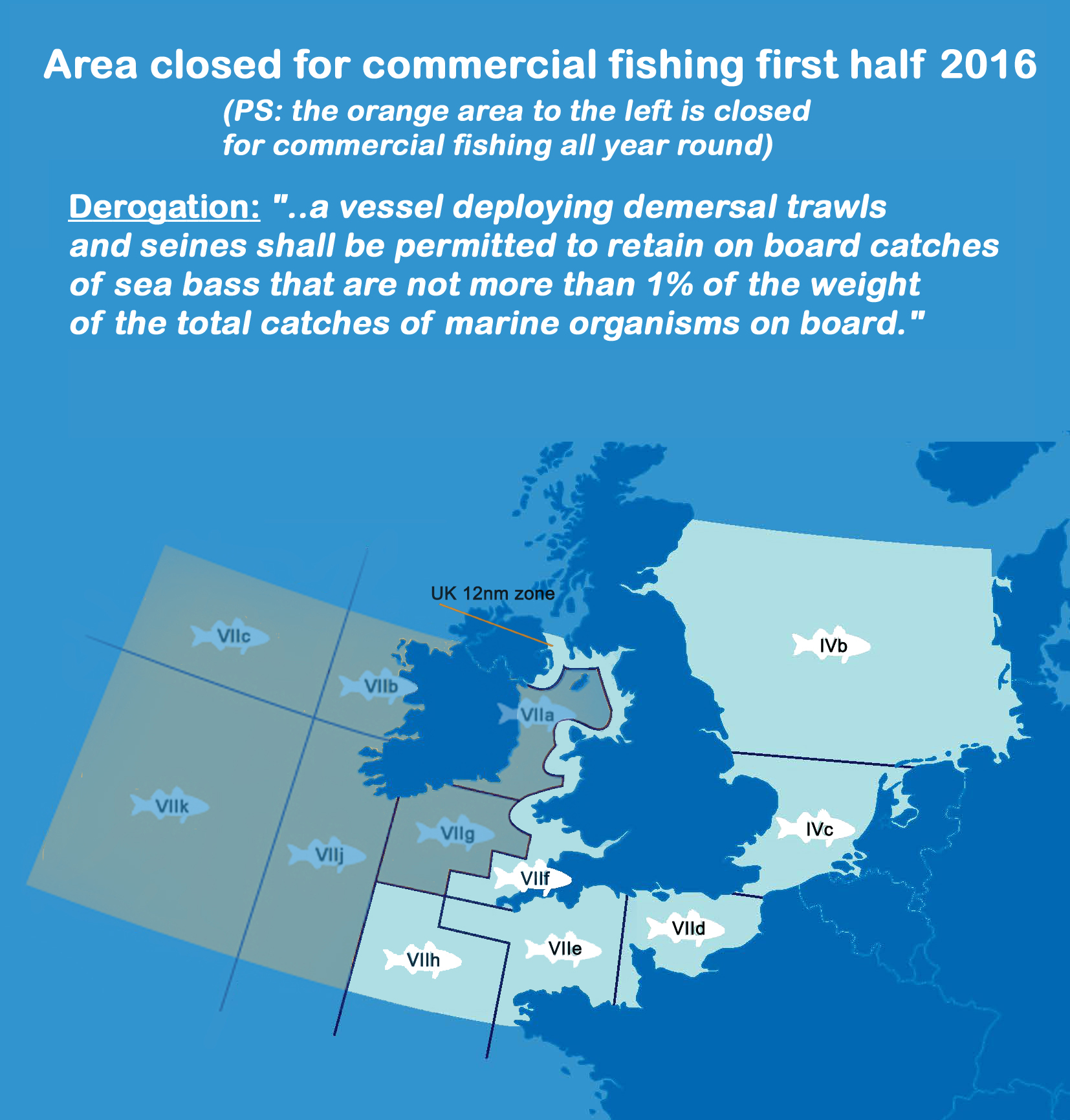
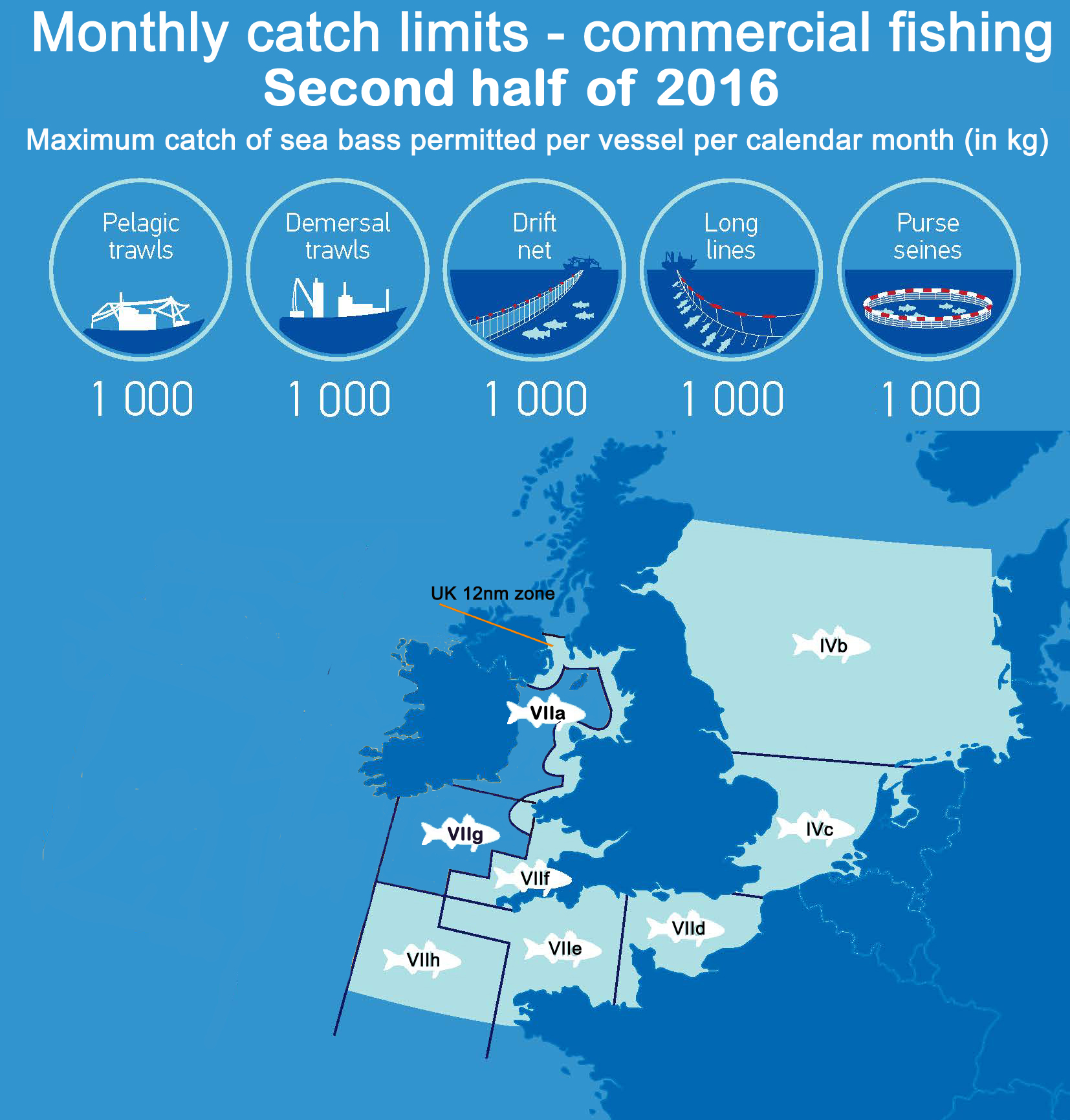
- From 1st January to 30th June 2016 a prohibition on commercial vessels fishing for bass in ICES Areas IVb, IVc, VIIa, VIId, VIIe, VIIf, VIIg, VIIh except for:
- Demersal trawls and seines which are permitted a 1% bass by-catch; and
- Hooks and lines and fixed gill nets which are permitted 1,300kg per vessel in January, April, May and June (NB: this does not include drift net fisheries). The fishery is closed in February and March.
- from 1st July to 31st December 2016 monthly catch limits apply to all vessels in ICES Areas IVb, IVc, VIIa, VIId, VIIe, VIIf, VIIg, VIIh
- 1,300kg per vessel per month for hooks and lines and fixed gill nets (NB: this does not include drift net fisheries)
- 1,000kg per vessel per month for all other gears
For recreational fisheries
In ICES Areas IVb, IVc, VIIa, VIId, VIIe, VIIf, VIIg, VIIh- from 1st January to 30th June 2016 catch and release only permitted
- from 1st July to 31st December 2016 one bass per fisherman per day
- from 1st January to 31st December 2016 one bass per fisherman per day
Reproduced here courtesy of - https://www.gov.uk/government/news/new-commercial-and-recreational-fishing-restrictions-for-bass-in-2016
____________________________________________________________
BASS and Angling Trust Statement
Organisations representing Britain’s 800,000 sea anglers have reacted furiously to the news that EU Fisheries Ministers, including the UK’s George Eustice, have caved into pressure from commercial fishing interests and granted exemptions to the highly damaging bass gill net fishery. This sector, described by Eustice as ‘low impact’ is actually responsible for by far the greatest over-fishing of threatened bass stocks in the UK. It will now only be closed for two months of the year rather than six as was planned in the proposed European moratorium on commercial bass fishing during the spawning period. For the UK alone, this represents an increase in gill net landings of 131 tonnes compared with the scientists’ recommendation of a maximum of 541 tonnes of landings in 2016 for the entire Northern bass stock. Furthermore the gill net monthly catch limit per vessel has been raised from 1.0 to 1.3 tonnes, making a nonsense of claims to be conserving bass stocks in line with the evidence and best scientific advice.
At the same time, the £200 million recreational bass sector will see a zero bag limit in the first 6 months and in the second half of the year the bag limit for anglers will be reduced from three fish a day to just one. Whilst anglers were pleased to have retained catch and release fishing for bass during the first half of the year, they claim that the overall package has unfairly targeted the one activity that is most sustainable and creates the greatest economic benefit, in favour of allowing what is virtually ‘business as usual’ for the netters. Prior to this week’s Council of Ministers meeting in Brussels to consider the Commission’s proposals, both the Angling Trust and the Bass Anglers Sportfishing Society (BASS) lobbied George Eustice to retain Catch and Release angling from January to June, to remove the gill nets and make bass a hook and line fishery only.
The only UK commercial sectors that look like seeing any significant reduction in catches are the trawlers and seiners which account for only 15% of all UK bass landing, whereas gill netting is responsible for over half of total UK bass catches each year and so should be the major target of these restrictions.
The figures recommended by the scientists at ICES in order to rebuild European bass stocks were for an 80% reduction in landings in 2015 and a 90% reduction in 2016 down to 541 tonnes in total. By watering down the Commission’s proposals, through an increase in the monthly vessel catch limits for both line fishing and gill netting and restricting their closure period to just February and March, the impact is now likely to deliver a little more than a 20% reduction in mortalities. By contrast anglers will be expected to return every bass they catch from January to June and then see their bag limit for the remaining six months slashed by 66%.
Angling Trust Campaigns Chief Martin Salter said:
“This is nothing more than a conservation con trick by politicians who have ignored the science and capitulated to commercial pressure from the very sector that has caused the decline of bass stocks in the first place. Anglers are supposed to feel grateful for being allowed to return our bass to the sea during the first half of 2016, whilst for four months of that period gill netters will actually see their catch limits increased. And how gill netting, which is responsible for more than half of all commercial UK bass landings and catches two and a half times more than any other method, can be labelled ‘low impact’ simply beggars belief.
For George Eustice to describe what has been agreed as ‘a good result’ for bass whilst at the same time claiming on TV that his local netsmen will be virtually unaffected by ‘this generous exemption’ is downright disingenuous and deeply insulting to Britain’s anglers and anyone else who cares about sustainable fish stocks.”
Nigel Horsman of BASS added:
“Once again, our politicians have ignored the scientific advice, ignored the economic facts, thought only about the short term and given in to the bullying tactics of the commercial fishing sector, shafting the future bass fishing prospects of hundreds of thousands of sea anglers in the process. The rapid decline in bass stocks will continue under this deal, giving a real risk that the whole bass fishery for everyone will have to be shut in the next year or two, just as we warned the Minister directly last week. A major plank in the reform of the Common Fisheries Policy was to take politically motivated, short term dealing out of fishery management and replace it with long term decision making based on ecological, economic and social evidence. Our politicians have just driven a coach and horses through their own new rules, proving again, that they are not to be trusted with anything to do with fishery management. Sea anglers are justifiably furious with this outcome for not only threatening their future sport, but also for the blatant disregard for any fairness or justice in allocating these “fishing opportunities” between anglers and commercial fishermen. This is a shameful result.”
Long standing bass campaigner and Angling Trust Ambassador Malcolm Gilbert said:
“The recreational sea angling sector has been well and truly screwed over by the politicians. This year, we have had a bag limit of 3 bass. In 2016, whereas, gill netters can now fish during four of the first six months and retain/land up to 1300 kilos in each of those months, recreational anglers have a zero bag limit. For the second half of the year, again whilst gill netters can retain/land 1300 kilos each month, recreational sea anglers are subject to a one bass bag limit. [Defra must have told the Minister that in 2014 only 111 vessels out of 1,331 in the UK managed to catch 1000 kilos of bass in a month, so the vast majority were unaffected by such a limit, yet the Minister has seen fit to increase the limit to 1300 kilos for gill netters, effectively dismissing the scientific advice with similar contempt with which he has treated the recreational sea angling community.
This debacle is not only grossly unfair to recreational sea anglers but even more importantly, the bass resource itself is going to be subjected to far higher levels of fishing mortality than the scientists recommend. In the long term it is a catastrophic outcome for all of us who crave restoration of bass stocks with truly sustainable long term exploitation.”
The Angling Trust will now be briefing MPs on the consequences of these latest decisions on bass and is hoping to see a debate in the Commons in order to hold the minister to account for this failure to deliver meaningful conservation measures and some of the extraordinary claims that he has made in defence of unsustainable fishing methods.
Reproduced here courtesy of - http://www.saveourseabass.org/en/fishing-ministers-accused-of-shameful-conservation-con-trick-over-bass-stocks/
_________________________________________________________________
Concerning fishing opportunities for sea bass 2016
A very comprehensive link to recent data Reproduced here courtesy of http://www.eaa-europe.org/topics/sea-bass/measures-2016.html ___________________________________________________________
Thursday, 15 October 2015

Sunday, 27 September 2015
Wednesday, 9 September 2015
Pippen, pippen, here pippen……
In an homage to the boy who became the second victim of the giant great white shark in the movie “Jaws,” Tim Flagler designed a colourful topwater pattern for bream and bass that is just the right size to keep small fish away while providing an irresistible lure to the big boys
Sunday, 23 August 2015
Wexford Harbour Heritage
Mapping the Heritage of Wexford Harbour and Charting the Navigation Channels A Heritage Week talk by Brian Coulter and Niamh Sheridan based on Heritage Council granted project: “Interactive heritage map and chart for Wexford Harbour”.
Venue: Wexford Town Library
Cost: Free
Organiser: Wexford Library
Email: wexfordlib@wexfordcoco.ie
Telephone: 0539196760
Website: www.wexford.ie/library
Booking Required: Yes
Dates: 26th August 13:00 PM to 14:00 PM
Saturday, 22 August 2015
Once
Once it was just binoculars. Then hidden cameras and infrared video. Today, keeping an even closer eye on nature, computerised mini electronics and spies in the sky track the travels and habits of creatures great and small.
Bulky radio collars are just about tolerated by lions, tigers, wolves and bears. Miniature lightweight transmitters are stuck to the backs of birds, bats and even butterflies. Now deep-ocean animals report on their wanderings by attachments that pop up to the surface, on command, and send radio packages of data to satellites. These trace the course of long journeys, the nursery and feeding grounds, the depths of dives, the temperature and salinity of the water, and levels of light.
Around Ireland such “tags” have been fixed to basking sharks, porbeagles and blue sharks, bluefin tuna, leatherback turtles and sunfish. Some of these tags have tracked transatlantic migrations. But some species can be less accommodating. Leatherback turtles, for example, need to be captured first – often rescued from entanglement in nets or ropes – and fitted with a harness to carry the tag.
But how do you engineer a 50cm fish to report on its travels? This summer has seen more tracking of the movements of sea bass, Ireland’s most prized catch of inshore angling and a fish in dire need of conservation. A collaboration of the Marine Institute andUniversity College Cork mounted a study that began in Cork Harbour and has since widened to the coast of Co Wexford. Implanting the bass with tiny acoustic transmitters, it tracks their signals by receivers mounted on buoys around the southeast and retrieved, once a fortnight, by computer at UCC.
The fish are caught by the region’s many bass enthusiasts – the sort of angler found in winter braced waist deep in tables of windblown surf to cast a lure beyond the third wave. In summer, however, bass move into estuaries to chase shoals of sand eels, which makes catching them a more comfortable challenge.
Fitting the tiny transmitter involves delicate surgery, with a preliminary anaesthetic bath and fresh seawater piped through the gills. An incision in the belly implants the transmitter, the skin is stitched up, and the bass, after recovery in a bucket of oxygenated seawater, then swims strongly to freedom (so I am assured), its progress marked by electronic pings.
This silvery, muscular, but slow-growing fish – a five-kilo female might be 16 years old – was once prolific around the southern coasts of Ireland. Commercial overfishing through the later 20th century concentrated on Wexford Harbour, the estuary of the River Slaney, but was halted by government order in 1990, with a two-fish-a-day bag limit also extended to anglers.
That protection was echoed this spring by an EU ban on commercial fishing of bass around most of Ireland and Britain, and a recreational-angling limit of three bass a day from the top of the North Sea around the south to Dingle, including the Irish Sea.
The Irish conservation laws did indeed produce a local rise in bass numbers, as young females grew to maturity, and a new influx of tourist anglers to Wexford and the southeast. But the good years have not held up since 2007. Among delegates to a conference at Dublin Castle last September was the Wexford angling writer and bass enthusiast Ashley Hayden. After 24 years of conservation, he declared, “estuaries, headlands, beaches and tide races from Carnsore Point to Galway Bay should be alive with midweight bass in the four- to six-pound bracket. Sadly and mysteriously they are not.”
Source – Michael Viney – Irish Times News Review – Saturday August 22nd
Wednesday, 5 August 2015

Sunday, 2 August 2015
To leave or not to leave
During summer and Autumn months some fish like bass will choose not to leave the estuary when the tide is exiting. Instead, sometimes, they will ‘lie up’ within the remaining water that stays in the estuary when the tide is out. These fish are often lying in deeper pools created where current has created ‘waves’ of sand. They may often lie along edges of bends where water is deeper and drop-offs exist. They are resting and maybe digesting and are very shy. One of the most exciting ways to catch these fish is with surface poppers. Now its often not easy to cast a bass popper with a long…….
A post from 2008 – Bass Fishing Estuaries - you can read more here
Tuesday, 9 June 2015
Bass tide approaching
A near perfect set of opportunities to catch bass on opening day or close to it presents itself this year on the south coast – current conditions might be considered difficult but that’s fine, it just adds positivity to the equation. It’s the sudden change around the 15th / 16th to south westerly that’s just perfect but not only that this is combined with an incredible set of NEW MOON tides too. A chance to catch em...the text below is from this post on Probassfisher - http://www.probassfisher.ie/2010/10/sequencing_27.html from a while back - expect an 'elastic to snap' on the 16th June.
The forecast was for the big blow to arrive quickly on the south coast on Friday late morning or early afternoon corresponding to a rising spring tide approaching the top of its cycle. What this would do and depending on the arrival time of the system would be to generate ideal fishing conditions for bass. Coastal water would be clear and break white in the increasing wind strength; the sudden wave activity generated would provide cover to hunt and also create feeding opportunities that haven’t existed for a number of days. All this was happening over a single rising tide on a spring cycle. It was a perfect short bass fishing storm that was visible from as early as the 10th of October – 12 days previously; this was the stretching of the elastic. It snapped on Friday somewhere around midday of the 22nd.
See latest forecasts here
http://www.xcweather.co.uk/forecast/rosslare_harbour
Wednesday, 20 May 2015
Further extensions
Published on Wednesday 20th May 2015
Coveney welcomes proposed ban on fishing for sea bass in waters around Ireland
The new regime will extend Ireland’s ban on seabass fishing to all EU vessels
Minister Simon Coveney TD, today strongly welcomed an EU Commission proposal for a comprehensive prohibition on commercial fishing for seabass in the Irish & Celtic Seas which underpins the conservation actions already taken by Ireland with regard to this vulnerable stock.
The Minister said “Ireland has had stringent measures in place for the protection of seabass, a very important angling species, for a long number of years. However, those measures only applied to Irish vessels. I have been very active over the past six months, lobbying the EU Commission and relevant Member States, on this issue. I am delighted that the EU finally recognises the lead taken by Ireland by extending our ban on commercial fishing to all EU vessels operating in the waters around Ireland.”
Minister Coveney added “The scientific advice for seabass is very worrying and we must all do our utmost to protect this stock. Ireland has been to the forefront in being the only EU Member State to afford maximum protection to this stock and today’s proposal will enhance that protection by making the Irish model obligatory for all EU vessels in the Irish & Celtic Seas.”
Once the measures are approved by the Council of Ministers, all commercial fishing for seabass will be prohibited in the waters around Ireland.
Second amendment of the Fishing Opportunities Regulation fixing for 2015 the fishing opportunities in the North Sea and in the Atlantic
(20/05/2015) The European Commission has today announced a further proposal aimed at halting the decline of sea bass in the Celtic Sea, Irish Sea, Channel and North Sea.
The Commission’s proposal is the third of a series of proposals in relation to this stock this year. This proposal is addressed to the Council of Fisheries Ministers and will enable the ministers to decide about catch limits for particular fishing gears in order to protect sea bass. The Commission's proposal would also allow extending a prohibition, currently applied to Irish fishing vessels, to all Member State vessels in waters adjacent to Ireland.
Sea bass is a high value, iconic species for recreational and commercial fishermen; we need to act to address the declining state of the stock, to protect jobs and livelihoods. If the EU does not act decisively now, the risk for greater and long term losses to this valuable fish stock and to coastal communities will be increasing.
Scientific advice has clearly identified the need to drastically reduce catches of this species, following an increase in the fishing pressure and a reduction in reproduction.
Previously the Commission has implemented a short term ban on pelagic trawling until 30th April, preventing the targeting of this species during spawning aggregations. A previous amendment of the fishing opportunities regulation has already introduced a 3 fish bag limit for recreational fishermen.
This latest proposal envisages a maximum catch per month by gear type, limiting the targeting of the vulnerable stock but allowing for incidental catches.
Ireland in the 1990’s introduced a ban on commercial fishing for its flag vessels. This prohibition is proposed to be extended to other Member States in the Waters adjacent to Ireland outside of the UK 12 nm limit by the latest.
It is now up to the Council of Ministers to decide on the Commission's proposal.
Subscribe to:
Posts (Atom)

